Nonfiction

Order and Entropy

Order and Entropy

Earth, Rock, and Craft on the Grand Canyon Trail Crew

By Nathaniel Brodie, with audio and image gallery

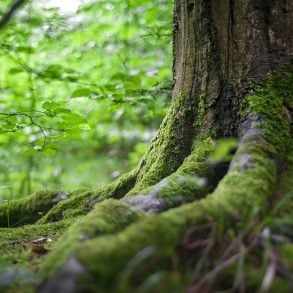
Piñon and juniper roots dangled into the open space once occupied by stone, roots that had wormed between the wallstones and wedged them apart as they fattened with age. Soil spilled from the breach. The Civilian Conservation Corps workers who’d built this wall sometime between 1933 and 1942 had used dirt instead of rock as backfill, and all that soil, year after year, had been inundated by snowmelt, frozen, then thawed, then frozen again—the pulsing, sodden earth working against the wall’s weakest connections. The wall rose out of a steep slope of decayed rock; we could see, where the wall still stood, how the slope had slipped from beneath the foundation, undermining the entire structure.

Hook and Sway

Hook and Sway

Essay and Photographs by Tamie Marie Fields, with audio

The waves come in waves. They come in translucent-green, fanned-out rays. They pour in rhythmic heaves toward the beach between us and the lagoon. They come in differently to this, our shallow harbor. They come in, exposed and transparent. They pound toward the crescent-moon-shaped beach on the spit’s other side, shushing those pebbles, wearing them smooth.

Bromancing the Gar

Bromancing the Gar

By Mark Spitzer

When I lit off for Texas in October, I had no idea what the story was supposed to be. To get the research travel grant from my university, I explained that my investigation on “the changing gar-scape on the Trinity River” would examine the effects of the new state laws for alligator gar. Meaning I intended to evaluate the management plans on this fishery now that commercial fishing and bowhunting had been reduced. But as I told my pal Minnow Bucket―who was just as psyched to catch a big-ass gator gar―my real goal was a seven-footer.

She Poured Out Her Own

She Poured Out Her Own

By Julene Bair

Used to be you could see the place from miles away—not only because my grandfather built a grand house in 1919, but because he chose the highest land around. High Plains Farm, he painted in white letters on our red barn. Now all you can see is the silhouette of a pivot sprinkler.

Love and Industry: A Midwestern Workbook

Love and Industry: A Midwestern Workbook

By Sonya Huber, with audio : 3rd Annual Nonfiction Contest Winner, Judged by Christopher Cokinos

Fall in love with a blue-faced interstate sign for highway 35-W in Minneapolis; ache and hold back tears because Minnesota winters are so cold and the sign has no choice but to shudder and brave the wind like a ragged prayer flag.

The Hawk Lady

The Hawk Lady

By Langdon Cook : 3rd Annual Nonfiction Contest Finalist

My boy talks to the hawks. Like me at his age, and even now, he is outraged at their indifference. A familiar red-tail in a snag starts at our approach, lifts regretfully from its bony limb.

Awake in L.A.

Awake in L.A.

By Josh Shear : 3rd Annual Nonfiction Contest Finalist

That moment when you’re screaming downhill into the valley, two hours out of Las Vegas into the setting sun with some too-clean ska music breaking through the speakers and into the air through the just-cracked windows.

Tortoise

Tortoise

By Jacqueline Kolosov, with audio : 3rd Annual Nonfiction Contest Finalist

West Texas: by midday, the fierce heat of early June has climbed to 103. About four o’clock the wind picks up, and the sky turns that smudgy blur of brownish-pink that suggests a coming rain, though the woman has lived here long enough to know that such a sign can prove to be a tease.

I Have Lived My Whole Life on this Boat (Kerala Backwaters)

I Have Lived My Whole Life on this Boat (Kerala Backwaters)

By Marco Wilkinson : 3rd Annual Nonfiction Contest Finalist

We are all boats alternately swimming, treading, and floating on any current that can bear us. The New York Times tells me that only one in ten cells in the human body is human. In a sweat lodge, the leader tells me we are floating on a turtle’s back in a great water.

Drawing from the Blast Zone

Drawing from the Blast Zone

By Jolie Kaytes, with image gallery

In the blast zone of Mount St. Helens, I have been drawing. With my eyes and with my pen I follow jagged ridge lines, the Us of valleys. I move through fallen forests, into snaking drainages, across billowy landslides, tracing contours, ticking textures.

Stretching Attention: Long-Term Science and Creative Writing

Stretching Attention: Long-Term Science and Creative Writing

By Charles Goodrich

How can we encourage the making of long-range commitments when things seem to be changing so fast? Against the tide of haste and short-sightedness, I want to share a couple of stories from the field about how scientists foster long-term research and how a program that hosts creative writing residencies has tried to adopt some similar strategies.

The Lazar House of Nancy

The Lazar House of Nancy

By Cal Freeman

On winter days like this, I think of visiting my Aunt Nancy in Northville Psychiatric Hospital. Seeing Northville at 14 was like being at a circus freak show. The ladies in her ward were not bearded, but many of them had that dim five o’clock shadow that comes with experimental psychotropics. There was general excitement in the ward over the carton of cigarettes my mother carried.

No Longer the Miner's Canary

No Longer the Miner’s Canary

INDIGENOUS NATIONS’ RESPONSES TO CLIMATE CHANGE

By Zoltán Grossman

Native peoples have faced massive ecological and economic changes in the past — from colonialism, genocide, epidemics, industrialization, and urbanization — yet many Native cultures have survived against overwhelming odds. The climate crisis is the latest, and perhaps the ultimate challenge, but this history may make Native peoples better equipped than the non-Native society that is reliant on chain grocery stores and shopping malls.

Cloud County Revival

Cloud County Revival

WIND POWER’S ASCENT IN RURAL KANSAS

By Philip Warburg

The wind is at times a frighteningly destructive force in Kansas life. Killer tornadoes have leveled entire towns and have made tornado chasing a precarious summer sport for daredevils seeking grim moments of media attention. Yet it also offers a vast and largely untapped source of clean, renewable energy. According to a recent government survey, Kansas could install sufficient wind power to supply almost 90 percent of America’s total present-day power consumption.

Time and Chance on a High Desert River

Time and Chance on a High Desert River

By Hal Crimmel

If you want to raft a remote Class V desert river, one with risky, demanding rapids, you want some assurance that the river you have chosen is familiar even if it isn’t. You might first check the geology — canyons formed in soft, easily eroded rock tend to contain predictable rapids forgiving to rafts, promising a margin of safety on unfamiliar water in most conditions.

At the Mall

At the Mall

By John R. Campbell

On Thursday morning I arrive where the well-groomed sales staff hover, where senior citizens speed-walk, where young mothers push strollers with a determined ease. Extravagantly real tropical plants soar above me. Fluorescent light kindles the general air, while sharply-focused halogen lights illumine the displays, so that the merchandise mimics light itself, bathing the world in a material glow.