|
||
|
||
|
||
|
|
|
 |
 |
 |
|
|
|
Plein Air The Language of Give and Take On an evening in late September, I describe my symptoms to a young doctor from Sri Lanka. All are related to a recent fall down a flight of stairs, and she asks gently probing questions about my consumption of alcohol and whether my husband has ever hit me. Fifteen minutes later, I recount a new series of complaints: excessive thirst, weight loss, blurry vision. We are not in an exam room. We are in a study room of a suburban Philadelphia library, playing out scripted scenarios like those that this physician may encounter when she takes the clinical skills portion of the United States Medical Licensing Examination. With the exam only two weeks away, we concentrate on her ability to gather information from patients and communicate her findings. She’s brought along a study guide that outlines 15-minute encounters the standardized patients might act out on exam day. Sometimes, caught up in a role, I abandon the script and improvise, adding or subtracting a symptom. She shakes her head.
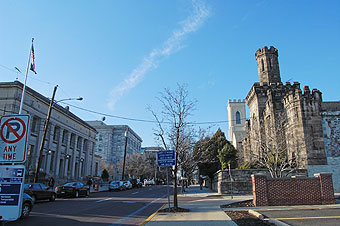
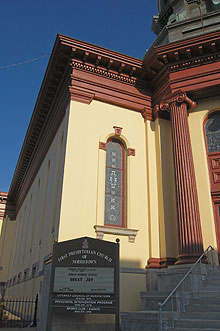
She and I have developed an easy rapport, even though we were matched only recently by the Literacy Council of Norristown, where she tested into the advanced class for English as a second language, and I completed tutor training—something I’d wanted to do for years. My workplace is just two blocks from the council’s headquarters in the historic First Presbyterian Church of Norristown, Pennsylvania. More than once, I jotted down contact information during their annual fall tutor and student recruitment. Until recently, some other commitment always made it impossible to follow through, get trained, begin to tutor. But you should do this, a little voice always nagged, you, with your love of English. And I do love the language and the excitement of sharing its permutations. In the past, I’ve taught English composition, creative writing, technical writing, and writing for the health sciences to college students. I’ve conducted poetry workshops for adult learners. But I always suspected that teaching ESL would create a different kind of exchange, one where I’d not only present my language, but also become a tour guide to our culture, a kind of native stranger, able to see America as an outsider might, able to interpret this odd new world to another. Expected that the experience would offer mutual enrichment. Like what happened with Carol and Jane. When Carol Zappala was growing up in the 1950s on Green Street in Norristown, gathering neighborhood children to play school and sticking stars on their papers, she knew she had a calling. But the call to teach was thwarted by circumstance until she was in her middle years, a medical transcriptionist who’d always loved languages, who became a tutor certified to teach adult basic education and ESL.
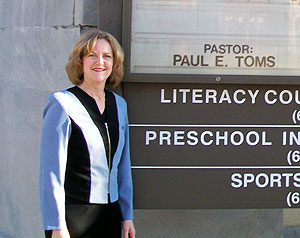
The concepts of need and transformation are implicit in the idea of literacy education. The idea of mutual transformation is inherent in the coming together of adult students and teachers from different worlds. Transformation was what the activist educators who founded the Literacy Council of Norristown in 1984 had in mind. They knew that improved reading, writing and speaking skills might allow a parent to assist a child with homework, get a better job, understand doctors’directions, pass exams, gain citizenship. And that literacy and fluency create an armor that can be used to advocate for oneself, navigate a complex financial system, avoid predatory lenders and fraudulent notarios—non-lawyers who often illegally practice immigration law without a license. Approximately 5,000 students later, the work of the council itself has been altered by time. Former volunteer tutors have made literacy education into careers; and literacy client demographics have shifted from American to foreign-born students.Nancy Mandato began her work with the Literacy Council of Norristown in 1992 as a volunteer tutor. Today, she directs the efforts of paid staff and more than 100 volunteer tutors. In addition to the one-on-one teaching that tutors provide, the council offers group classes in the evening. In the fall of 2008, Mandato saw the annual client list rise to 250 students, saw the number of registered ESL students spike 150 percent. She believes the demand for the council’s services will continue to increase, especially for the area’s growing immigrant population and those who will need to upgrade their skills to obtain or retain employment in a worsening economy. Many students, she notes, are still waiting for tutors. Like Mandato, Elaine Green was once a tutor. The sense of immediacy and personal satisfaction that she found in literacy education offered exciting redirection. She left her job in financial services and went to Widener University, where she received a master’s degree in adult education. She developed an adult diploma program as an alternative to the GED, as well as a tutor training program. Although she now works in a salaried position at the literacy council teaching English as a second language, she recognizes the unpaid rewards of tutoring. Over lunch at a Norristown taquería, she lists benefits that the activity of tutoring offers the many retirees who volunteer their time. She sees literacy tutoring as an active state that supports healthy aging, as well as interpersonal growth. Tutoring requires preparation, mental plasticity, and the empathy needed to appreciate how foreign-born students struggle with American culture, with its speed and impatience. Mandato and Green paint the broader picture: in thousands of literacy centers across America, adult learners hope to develop skills in reading and writing, and to gain medical, financial, and computer literacy. Some cannot read highway signs or the instructions on their pill bottles. Some hold advanced degrees but work in blue collar jobs because they cannot navigate their life’s occupation in another language. All will need education to move forward, and much of it will be provided by volunteers.
In December, back in the study room of the library where we’ve meet for the past three months, I play an audio clip for my student, who passed her medical licensing exam in October. She wants to be able to understand rapidly-spoken English, and speech that is peppered with jokes, witty asides, figurative language and barely comprehensible allusions. She has been watching the Fox medical drama House and wants to understand its snappy, idiom-laden dialogue. I tell her that even American-born viewers have trouble grasping his banter, but for this class I’ve recorded dialogue-dense scenes from “Daddy’s Boy,” a second-season episode. Each clip moves toward diagnosis, ruling out the obvious and searching for the exotic. It’s challenging for both of us. The playback of my digital recorder is not easy to hear and Dr. House is making one smart remark after another. In one breath, he orders imaging, and in the next, tells a resident to “track down all those Richie Riches who went to Jamaica” with the patient. This allusion leads us down an unexpected verbal path, away from transverse myelitis and toward Macaulay Culkin. I love these moments of discovery, this give and take of examples. There is always laugher. My student, I am sure, will practice medicine in this country, as she did in Sri Lanka. Her English is very good, and each week she adds new words and American idioms to her vocabulary. In addition to our sessions, she attends classes offered two nights a week by the literacy council. She graciously supports her fellow students, who are all brave voyagers. If we are lucky, we may travel with them for awhile and exchange stories. If we are very lucky, our stories will overlap, interpreted in good faith, annotated with mutual kindnesses.
|
|
|
|||||||||||||||||||||||||||||||||||||||||||||||||||||||||||||||||||||||||||||